Tuesday, March 19, 2013

Art by Patrick Maloney

This month's exhibit at the Maurice del Mue Galleries of the San Geronimo Valley Community Center is a group show titled Celebrating Color 8 Different Ways.  I’m  highligthing just one of those exhibited artists here for now-- Patrick Maloney.

Below is his remarkable work.

Adam and Her
Mother in Her Garden
A Gathering of Angels
A few drawings done by Maloney in Bic pen:

World in Her Hands

Empress

Squiggle Head

As a painter, Patrick Maloney has exhibited widely.  He’s worked in the past in graphics, advertising art and animation (such as John Korty's feature length animated film Twice Upon a Time).
He currently teaches art courses at San Quentin State Prison.

The exhibit also features fine artists Barbara Hazard, Jackie Kirk, Art Holman, Joan Thornton, Kay Carlson, Ayumi Kie Weissbuch and Connie Smith Siegel and runs through March 29th.


You can learn more about the exhibit at:

Sunday, March 17, 2013

Trashman on a Tortilla

Tortillas printed with artwork by the late Spain Rodriguez


from the Spain memorial held at the Brava Theater in San Francisco, Saturday, March 16th.
Tortillas printed by the Great Tortilla Conspiracy.

Monday, March 4, 2013

Larry's Cartoon Vault: Remembering Willy Murphy


Cartoonist Willy Murphy died 37 years ago this month on March 2, 1976.
from Artists in Print

He was part of the underground comix movement in the late ‘60’s-early ‘70’s in San Francisco.
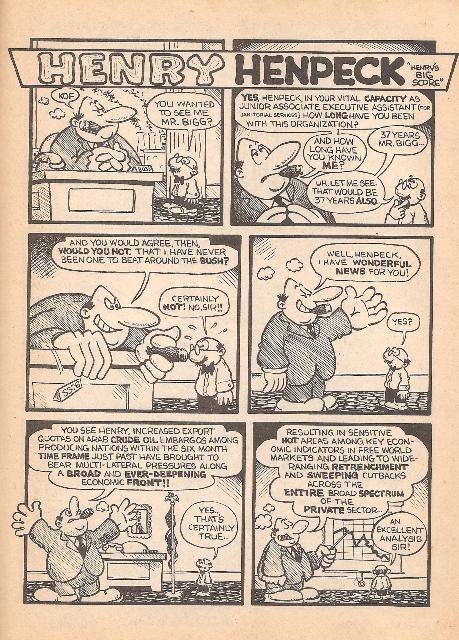
San Francisco Comic Book #4 1972

Of all the notable underground cartoonists of that era, Murphy is perhaps one of the most under acknowledged. That’s truly too bad because he was one of the best. Willy Murphy was the Milt Gross of the underground.  Seriously wild and wacky (and an all around good guy).
I first remember seeing Murphy’s work in the Berkeley Tribe underground paper and immediately took to it. ( I mostly remember a wonderfully devastating cartoon of Richard Nixon).
As a youngster-neophyte cartoonist in San Francisco,  I looked up to Willy  and he was very supportive of my early scribblings. In fact, I saw print a couple of times in those early days because Willy was in charge of editing the project (such as the San Francisco Sunday Paper and perhaps an early issue of San Francisco Comic Book).
As I understand it, before cartooning Murphy had worked in advertising. I believe he did photography as well.  I recall him once saying to me that he had loved photography but it didn’t love him.
Willy Murphy died young. He was truly building a head of steam by the late 70’s creating and contributing to a number of projects including the Give Me Liberty, Two Fools,  Arcade Comics Revue and his own title Flamed Out Funnies.

He was also just beginning to contribute to National Lampoon at the time of this death.  In fact, his Lampoon deadline played a role in his demise.
Willy was working on a piece for Lampoon and had a cold that turned into pneumonia while he  continued to work to meet his deadline. He was found unconscious in his room and taken to the hospital but never recovered. He was 39 years old.
We’ll never know how good he could have been. He did some awfully funny stuff that deserves to be remembered.
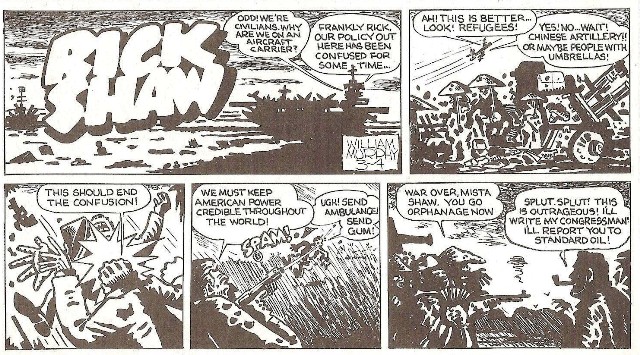
Here are a few odds and ends (some odder than others) by Willy Murphy. 


from Arcade #3


from the short lived San Francisco Sunday Paper 1972

Arcade


from Snarf #6


Again from San Francisco Sunday Paper


A nutty parody of the long ago Terry and the Pirates type strips


Arcade #4


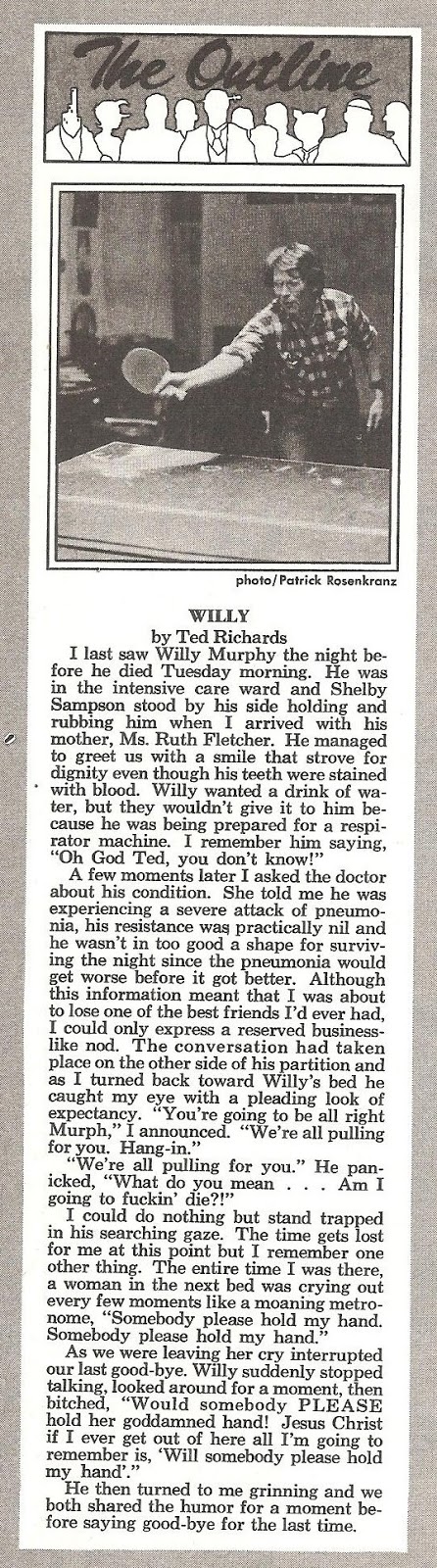
Ted Richard's piece from Arcade #6


Tuesday, February 26, 2013

Views from the Vault


I often post items here under the heading of Larry’s Vault or Larry’s Cartoon Vault.

Molly suggested I give a glimpse of what I'm talking about. Here’s a brief visual tour of the Vault itself....


Cluttered... lots of random original artwork (drawings in the background by John Groth, Jack Rickard, George Woodbridge, Foster Humfreville, David Posada, et al...), a lot of flat files, books, and portfolios with more art...and a comic book spinner rack (I found it on the street one night in the Sunset district of San Francisco many years ago).

The table way in the back behind the chair is my original drafting table I used when I was actively cartooning. An old school drafting table I purchased at a flea market over 30 years ago (the table was pretty battle scarred when I got it).  


Around the bend...more files, flat files, artwork..
The large screen mounted on the wall (a parody of the traditional 19th century
Japanese folding screens) was painted by Molly’s grandfather, New Yorker artist Rea Irvin.


Another view. Also another drafting table piled with portfolios, etc. (This drafting table belonged to the late great cartoonist / illustrator, Creig Flessel).

All the books seen here are graphic arts, illustration, cartooning and printmaking related works (ranging from Thomas Wright’s 1875 edition of A History of Caricature and Grotesque In Literature and Art to Criag Yoe‘s recent Comics about Cartoonists).

There's actually a lot more ("too much" - Molly would say) but that's probably gives you the idea.

Saturday, February 23, 2013

Larry's Vault: Scratchboard artwork


I’ve always been fond of scratchboard.  Scratchboard is a heavy paper stock with an inked, chalky coating which can be scratch to reveal the white below.
A full description of scratchboard technique from Henry C. Pitz’s classic 1949 text,  Pen Brush and Ink, is presented below.


(don't forget to click on images to enlarge)


Scratchboard was a flexible, versatile material as evidenced by how often it was employed historically by illustrators and cartoonists.  I say “was” because although a few artists may still use it, scratchboard-- like most other handmade graphic art materials in this digital age-- is probably doing a slow fade

Below are a few examples from my Vault of original art done on scratchboard.


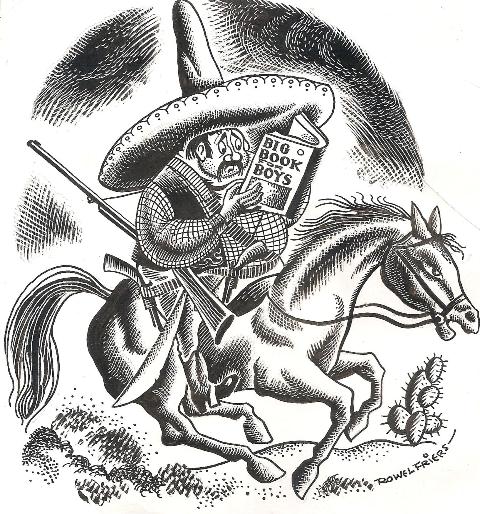
This piece was done by Rowel Friers, the brilliant Irish cartoonist and illustrator, for the Dublin Opinion in 1949.


   Ervine Metzl did this illustration for the New Yorker .

 A nice piece by cartoonist Bill Hoest (circa 1960's).


A beautifully rendered frog  by Marin county artist Kathleen Edwards.


Another piece by Kathleen Edwards (this is from Molly’s collection).

Dalison gave me this nice practice piece back in the early 1980’s.


A simple but effective use of scratchboard by an artist named Thorne (I don’t know his first name).  It appeared in Galaxy magazine in 1951 as an illustration for a story by Damon Knight.


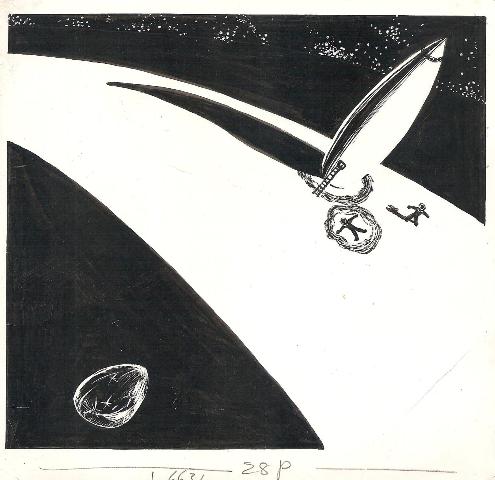
A dramatic  illustration for the science fiction magazine Worlds of Tomorrow 1966 by Peter Lutjens.

  
John Adkins Richardson goes to town on the this piece used as the cover of Fantastic Exploits in 1969.

  
John Bunch combines scratchboard with a nice gray opaque  tones for this illustration of Isaac Asimov’s short story  "Tyrann", again for  Galaxy magazine (1951). 


As I stated I’ve always liked the scratchboard technique. 
In fact, one of the very first drawings I ever sold (as a teenager) was a scratchboard spot drawing to Writers Digest magazine.

Here are some scratchboard odds and ends by me from years gone by….


Skeleton a little practice piece from long ago.


This tiny little alien was done in 1974.


More outer space stuff (1975).


Another exercise


Ditto


The cover of my mini book No Audience (1981)


A panel from the comic book story"A Lil' Monster Making a Phone Call"
(it appeared in Eclipse magazine 1982)


The back cover of one of my New Years cards (circa 1981)


Rippee images copyright 2013 Rippee


Monday, February 18, 2013

Jenny Hunter Groat (1929-2013)


circa early 1960's

Jenny Hunter Groat was an artist that I've known for the last many years through my association with the San Geronimo Valley Community Center.     

I wrote the obituary below for the Center's newspaper Stone Soup:


Our hearts go out to Peter Groat, who has lost his loving soul mate of 58 years, Jenny Hunter Groat.

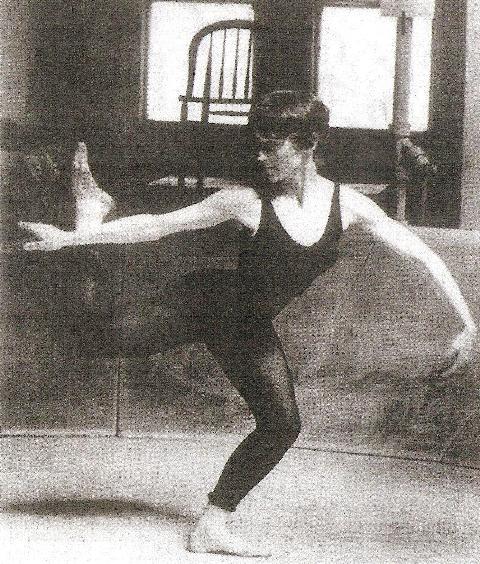
Jenny was a remarkable creative and inspirational spirit. As an artist she had the capacity to reinvent herself several times over.  Her creative endeavors moved from modern dance to calligraphy to abstract painting.
Jenny ‘s first career was as a dancer.  She studied with Anna Halprin and early on taught dance at Reed College in Portland. In the 1960’s, she founded her own dance studio, Dance West, in San Francisco. Jenny choreographed works for KQED, Stanford University, The Actor’s Workshop and the Carmel Bach Festival.


Then after 19 years of dance, she shifted creative gears to become a well known calligrapher.  She took commissions and taught workshops around the country and in Canada. Her work in calligraphy lead to an interest in creating art books.  One of her art books, “A Vision”, is in the permanent collection of the National Museum of Women in the Arts in Washington, D.C.


Jenny eventually moved away from calligraphy desiring to return to the non-verbal. She began to paint. Even as a dancer she had been drawn to the abstract works of Jackson Pollack and Robert Motherwell. She once referred to her own painting as “second-generation abstract expressionism”

As disparate as these forms of expression may seem, her artistic life formed a continuum.  With her spontaneity of line and movement Jenny brought the sensibilities of a dancer to her painting and calligraphy.    

Jenny’s calligraphy and painting were her dances.
We, who have been lucky enough to know Jenny, will miss her warm, creative spirit.

She brought light to all she met.


Long before I met Jenny at the Center  I was familiar with her work in her earlier persona as a calligrapher. Back in San Francisco, a couple of decades earlier, we were both members of a graphic artists organization--Artists in Print (AIP).

Here is an article that Jenny wrote in 1980 for the AIP member publication Graphiti


Jenny with an old friend, artist Harry Cohen
(photo by Peter Groat)


For an interview with Jenny and Harry see our archives for January 26, 2011